
"fruit is"
51000 article(s) found

What exactly does the coffee bean coffee fruit look like?
What we see every day are roasted coffee beans, at most we have seen yellow-green raw coffee beans, which is the most kind of fruit. What did it look like at first? What we usually see is a bit like cherries, so we sometimes call coffee fruits coffee cherries. Generally speaking, there are two coffee beans in each coffee fruit, which are covered with exocarp, pulp and pectin.
Coffee common sense what does the fruit of coffee look like?
What we see every day are roasted coffee beans, at most we have seen yellow-green raw coffee beans, which is the most kind of fruit. What did it look like at first? What we usually see is a bit like cherries, so we sometimes call coffee fruits coffee cherries. Generally speaking, there are two coffee beans in each coffee fruit, which are covered with exocarp, pulp and pectin.
The birth of coffee beans (1)
Coffee trees take 3-5 years from planting to fruiting. 6-10 Coffee trees bear fruit most easily in 15-20 years, which is the harvest period. Coffee trees are usually bred in nurseries, grown into saplings, and then moved to coffee plantations a year later, following exactly the same methods used by Arabs to grow coffee trees. For the first four or five years of its life, coffee trees take root downwards and grow upwards.
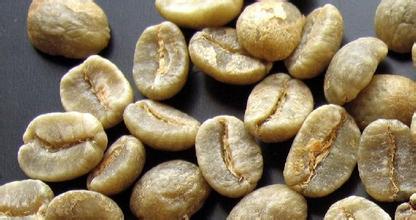
The main points of knowledge of coffee beans: a detailed introduction of the process from fruit to raw coffee beans
Coffee training basics-from fruit to raw coffee beans: a coffee tree can harvest 3-5 kilograms of fruit, and raw coffee beans account for 5% of the fruit quality. Going from fruit to raw coffee beans is really a time-consuming and laborious task. Arabica and Robusta Arabica coffee account for about 2% of the world's coffee production. The plant is not suitable for high temperature, low temperature, more rain and less rain.
Basic knowledge of boutique coffee the growth of coffee trees
The growth and fruit of coffee trees varies with different varieties / environmental conditions. In the high altitude area of Yunnan, the small seed coffee cultivated has the advantages of cold climate, large cloud cover, short light and slow plant growth, but the branches develop into sturdy backbone branches after the first branch bears fruit, and the second / third branch has strong ability to produce. The growth is exuberant and the fruit is dense, which is the main fruiting branch, so it is suitable to adopt single trunk shaping. Two / three
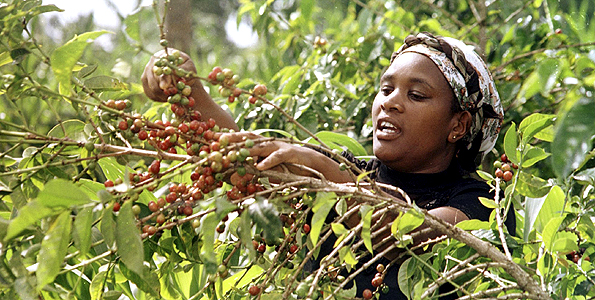
Coffee from fruit to raw bean dry washing semi-washing refined Colombian coffee beans
Coffee changes from fruit to raw bean there is a pair of oval seeds in the middle of the fruit, which are covered with outer skin, inner pulp and pulp. Ripe fruit spoils in a short time without treatment. Refining is to remove the skin and pulp of the coffee fruit, and then take out the seeds. Generally speaking, about 1 kg of raw coffee beans can be obtained from 5 kg of coffee fruit. The refining methods include drying and washing.

Boutique coffee learn coffee trees, coffee flowers, coffee fruits
The coffee tree is an evergreen tree with small white flowers and green fruit that does not turn red until it is ripe. A normal coffee tree can usually grow to a height of 5 to 10 meters, but bean farmers often prune it to less than 2 meters for harvest convenience. After flowering, there are many dark green oval fruits, and the mature fruits change from dark green to bright red, due to the color and cherry.

Boutique Indonesian coffee bean wahana Hua Hanna honey fruit
Wahana Manor from Indonesia honey-treated coffee beans, referred to as Hua Hanna honey fruit. The so-called honey-treated coffee beans is actually a compromise without good coffee treatment. Hua Hanna honey fruit is impressive with a light and soft sour taste; it is an approachable coffee bean that is not as fishy as Indonesia's Mantenin coffee beans in the past. The so-called honey treatment is called Honey Proc
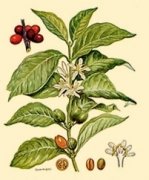
The basic concept of coffee beans
There are more than 60 species of coffee plants in the world, only 25 species are cultivated for coffee production, of which only 4 species are used as commercial coffee: Coffee liberica, Coffee canephora, Coffee arabica and Coffee deweverei, which are botanical scientific names. Coffee in the world today.
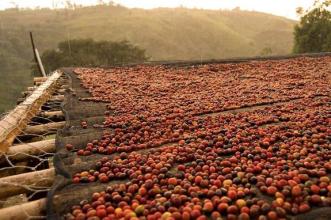
The treatment method of Coffee Fruit-- the introduction of Solar method and its difference from Water washing method
The solarization process can also be called a natural process, which is basically the oldest, simplest, and requires the least mechanical tools. The first step is to sort and clean it up first. Immature, overripe, damaged coffee fruits will be singled out first. At the same time, the branches, leaves, mud and stones mixed in the fruit will also be removed. Sieves are usually used to deal with this preliminary

How long does it take for coffee trees to blossom to mature
One of the characteristics of a coffee tree is that its fruit can bear fruit several times a year, and that flowers and fruits (also known as cherries) coexist at different stages of ripening. The whole coffee harvest is swayed by the vagaries of nature. If the fruit is too ripe, the beans in it will rot. If it is not ripe enough, the beans picked will not

The growth of coffee trees the process of growing coffee beans
The growth and fruit of coffee trees varies with different varieties / environmental conditions. In the high altitude area of Yunnan, the small seed coffee cultivated has the advantages of cold climate, large cloud cover, short light and slow plant growth, but the branches develop into sturdy backbone branches after the first branch bears fruit, and the second / third branch has strong ability to produce. The growth is exuberant and the fruit is dense, which is the main fruiting branch, so it is suitable to adopt single trunk shaping. Two / three
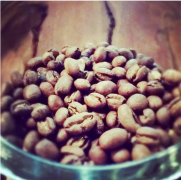
The growth process of planting Coffee trees basic knowledge of Coffee
The growth and fruit of coffee trees varies with different varieties / environmental conditions. In the high altitude area of Yunnan, the small seed coffee cultivated has the advantages of cold climate, large cloud cover, short light and slow plant growth, but the branches develop into sturdy backbone branches after the first branch bears fruit, and the second / third branch has strong ability to produce. The growth is exuberant and the fruit is dense, which is the main fruiting branch, so it is suitable to adopt single trunk shaping. Two / three

Sunburn Yega Xuefei all Red Fruit Helios Coffee hand Powder Water ratio recommended _ Solar Yega cooking suggestion
Professional coffee knowledge exchange more coffee bean information please follow the coffee workshop (Wechat official account cafe_style) 2018 new production season Ethiopia Jose processing station all red fruit sun Yega Sheffield coffee G1 origin. Yirgacheffe,Gedeo Zone,SNNP,Ethiopia processing plant. Garse Station altitude. 2050m bean seed. Ethiopia Heirloom / Ethiopia

Small fruit coffee small coffee is Arabica Arabica coffee beans? How much is the arabica coffee?
Professional coffee knowledge exchange more coffee bean information please pay attention to coffee workshop (Wechat official account cafe_style) small fruit coffee (scientific name: Coffea arabica), also known as Arabica coffee, Arabica coffee, is a species of Rubiaceae coffee, is the most traditional variety of coffee. Originally from East Africa, coffee was monopolized by the Arab world for a long time before the 15th century

Production time of Brazilian coffee beans-- introduction to the planting environment of manor producing areas pictures of Brazilian coffee trees
The planting environment of Brazilian coffee picking season-manor growing area when the coffee fruit changes from turquoise to full wine red, it indicates that it is ripe, but there are also some strange varieties, the ripe coffee fruit appears yellow. The coffee fruit looks like cranberries or cherries, but the shape is closer to the oval. Coffee farmers usually judge whether the coffee fruit is successful by pinching the coffee fruit with the thumb and index finger.
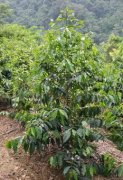
A brief introduction to Coffee Tree, Coffee Flower and Coffee Fruit
The coffee tree is an evergreen tree with small white flowers and green fruit that does not turn red until it is ripe. A normal coffee tree can usually grow to a height of 5 to 10 meters, but bean farmers often prune it to less than 2 meters for harvest convenience. After flowering, there are many dark green oval fruits, and the mature fruits change from dark green to bright red, due to the color and cherry.

The production process of coffee beans A coffee tree can harvest 3 Mel 5 kg of fruit.
A coffee tree can harvest 3-5 kg of fruit, and raw coffee beans account for 1. 5% of the fruit quality. Going from fruit to raw coffee beans is really a time-consuming and laborious task. Arabian, Robusta and Librian Arabian coffee account for about 2% of the world's coffee production. The plant is not suitable for high temperature, low temperature, more rain and less rain. Coffee beans are oval flat and have a high height.

Classification and causes of defective beans in SCAA Coffee SCAA level: Italian mixed beans with secondary defects
CAA level: whole sour bean is a first-level defect; one whole sour bean = a complete defect name: local sour bean SCAA level: local sour bean is a secondary defect; less than half of a bean is sour bean, 3 beans = 1 complete defect cause: agriculture and treatment. Sour beans are caused by fermentation, and they are contaminated by microorganisms in many places in the process of harvest and treatment.

Pacamara | what's the difference between sun-dried beans, sun-dried Pacamara and washed?
Pacamara | what's the difference between sun-dried beans, sun-dried Pacamara and washed? Orange Fruit Manor (Best of Nicaragua winning Manor | Award record: 2016. 1st place) Variety: Pacamara Manor owner: Luis Emilio Valladarez Zelaya producing area: Nueva Segovia (New Sagovia) City: Dipilto Grade: Strictly Har